March Recap: What Happened with Google's UCP

No. 1 STRATEGY, AI COMMERCE & THE JAGGED EDGE
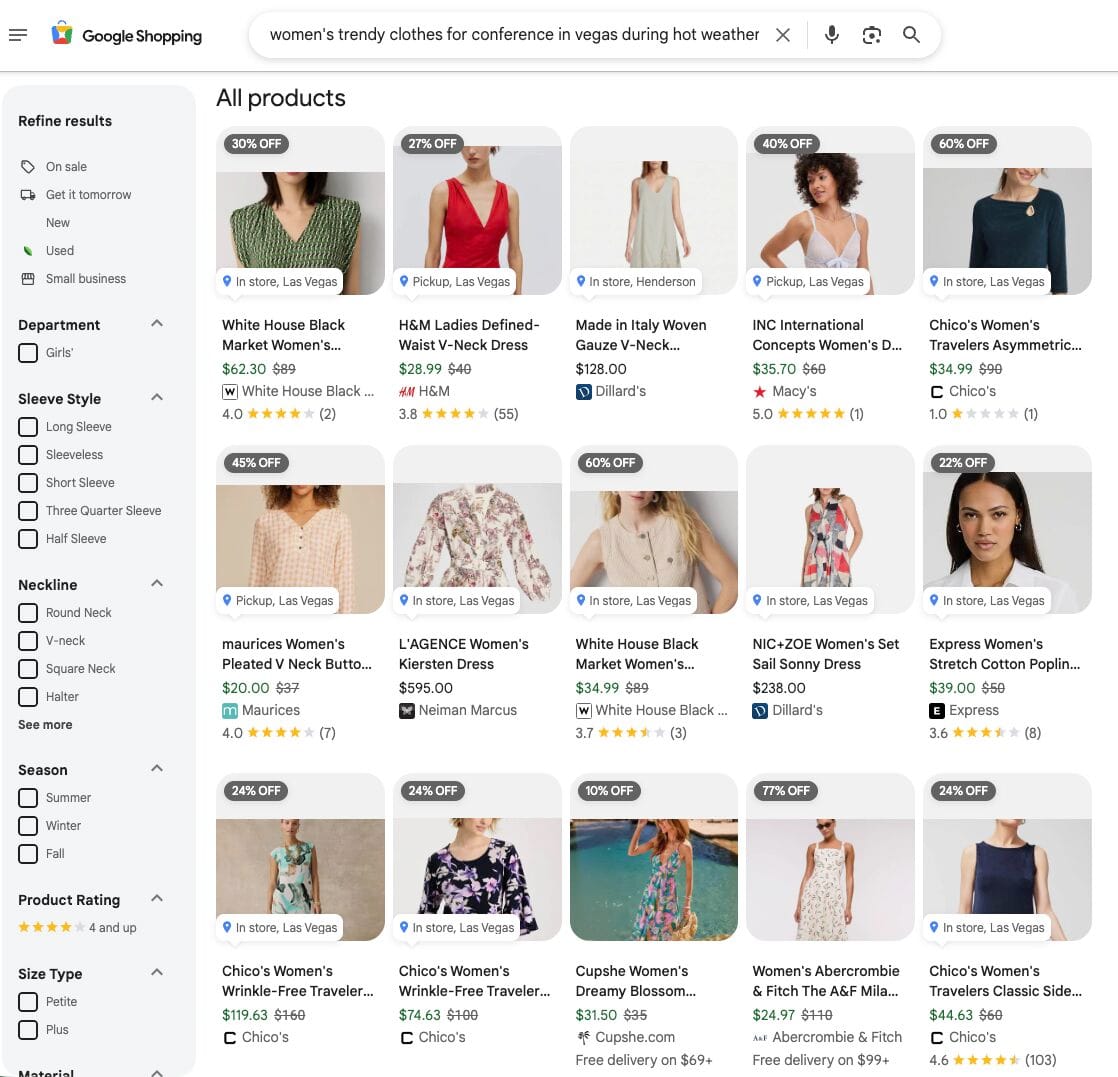
True Story. I was searching for "women's trendy clothes for a conference in vegas during hot weather" for ShopTalk. Want to guess what showed up in my top 12 results? A pair of INC pajamas from Macy’s....
Now, I love a good lounge set as much as the next person, but unless in the context of what I was searching for, that’s a massive data fail. In the Google Merchant Center (GMC) world, that is what happens when you're missing key attributes and your catalog doesn't speak the same language as your customer’s intent.
This is the "Thin Data" trap. Most product catalogs are filled with bare-bones technical specs that mean nothing to an AI. Or worse, they're missing attributes completely (we sometimes see 100% missing attributes for things like material, pattern, product detail, etc. which is BAD!). When your data is thin, the algorithm guesses. And when it guesses, it thinks "Vegas" + "Comfort" = "Pajamas." Smh.
Hot Takes - The Data Gap is Your ROAS Killer
You can have the exact same SKUs and the exact same ad budget as your competitor, but see a completely different return. Why? The data gap. Most retailers rely on broad, technical terms. But AI doesn't just want "proprietary waterproof technology." It wants to know if a boot is good for "wet weekend hikes in the Pacific Northwest." When you translate technical specs into human language, your CPC drops because you’re matching highly specific, low-competition queries that the AI can finally understand.
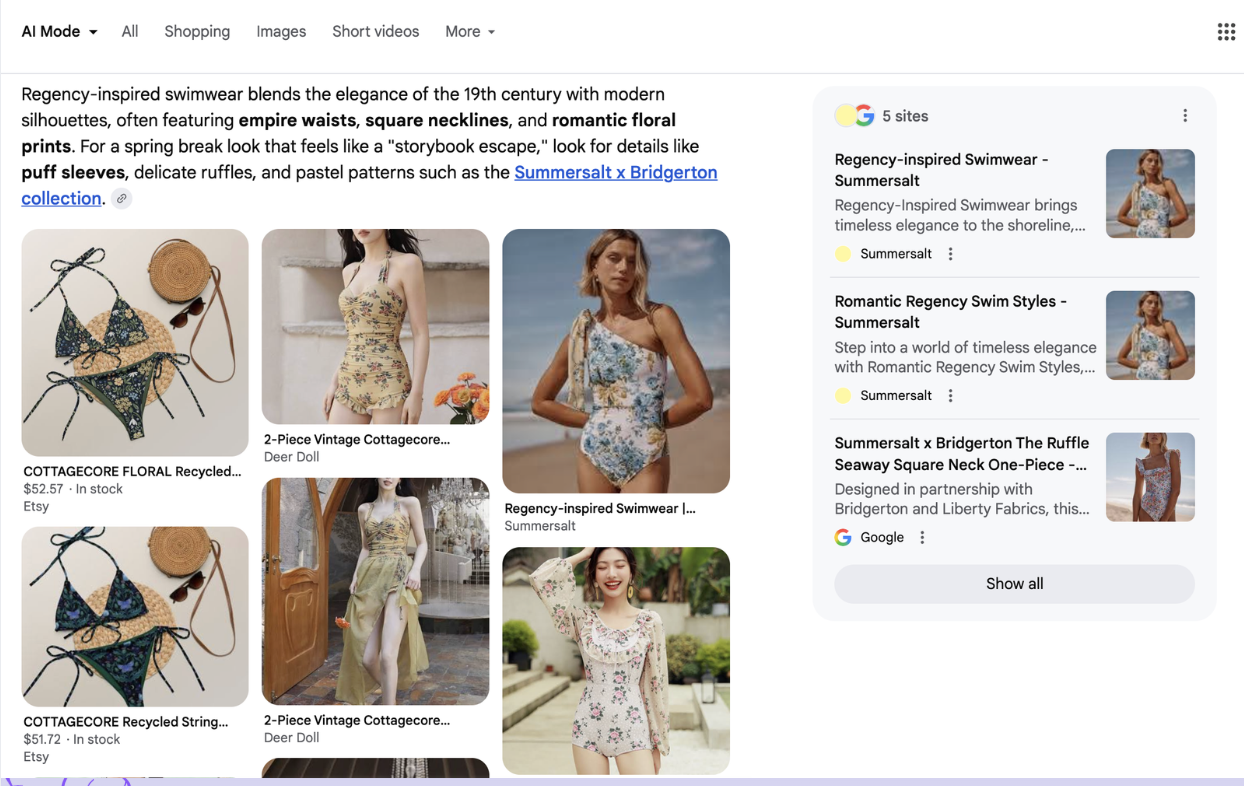
For example "Regency style swimsuit for spring break" with Summersalt as the first example in Google Shopping and Google's AI Mode:
Industry Pulse
AI Overviews Hit the 14% Tipping Point - A massive study of 20 million SERPs just dropped some heavy news: Google’s AI Overviews now appear on 14% of all shopping queries. That’s a 5.6x increase in just four months. If your brand isn’t cited inside that AI summary, you’re effectively invisible to top-of-funnel traffic. Standard organic and shopping listings are being aggressively pushed "below the fold."
OpenAI’s "Checkout Retreat" - OpenAI has [quietly] scaled back its "Instant Checkout" features in ChatGPT. They’ve realized that being a direct transactional marketplace is hard when product data across the web is this messy. This signals a shift: OpenAI wants to be the intelligence layer, not the mall. Purchases are being routed back to the retailer’s own site, putting the pressure back on you to ensure your landing pages perfectly match the "conversation" they were just having, or you’ll lose the momentum.
Google Expands "Agentic Shopping" - While OpenAI retreats, Google is leaning in. Its new Universal Commerce Protocol (UCP) just added Cart, Catalog, and Identity Linking. AI agents can now build multi-item baskets and pull real-time inventory directly from your catalog. If your product data isn't "LLM-ready," the agents won't even invite you to the party.
Google’s AI Mode Gets Direct - There’s also new "Direct Offers" in Gemini-powered search that replaces the traditional coupon hunt with interactive, real-time promotions served directly within the AI conversation. But Google’s AI won't just guess your current promo. To win these high-intent slots, retailers must provide structured, "LLM-ready" product metadata so the AI can reliably parse and cite your specific deals.
Amazon’s "Proximity Index" - Analysis of Amazon’s latest A10 algorithm update reveals heavy weighting for the "Shipment Proximity Index." Organic rankings now fluctuate based on how close your inventory is to the specific customer. If your products aren't distributed across regional warehouses, you may "vanish" from search results for customers in distant regions.
The Jagged Edge - You have the right products, but not the right content.
Shoppers are increasingly turning to ChatGPT, Gemini, and Perplexity for product recommendations, simply having a website/category landing pages isn't enough. Your content must be grounded so these AI agents can find and trust it. "Grounding" in the AI world means tethering large language models to verifiable, real-time facts like your specific inventory, technical specs, and unique brand voice, rather than letting them "hallucinate" or rely on outdated data.
Optiversal powers this transition by transforming your static product catalog into a structured, AI-ready content ecosystem. By identifying semantic long-tail keywords (like "quiet dishwasher for small apartments") and automatically generating enriched landing pages and FAQs, Optiversal ensures your products are the ones being cited and recommended by AI discovery engines. It bridges the gap between your raw data and the conversational search of tomorrow, making your brand both visible and authoritative in the generative/answer engine landscape.
Product Spotlight: The FAQ Factor
Why "Small" Questions Drive Big Results - FAQs on your PDPs are usually an afterthought, but they’re actually a secret weapon for winning AI citations.
Let's bust some myths:
- "It'll look repetitive." Nope. We generate unique Q&A sets for every long-tail page. A "Graphic Tee" page and a "Corset Top" page will never sound like clones.
- "It’s a coding nightmare." We handle the FAQ Schema automatically. It tells the AI exactly what your content is so you can dominate those rich snippets.
- "AI FAQs are generic." Not ours. Optiversal pulls from specific page context, actual care instructions and fit advice, so it stays factual, not "fluffy."
ICYMI - Check out the “Feeds View”
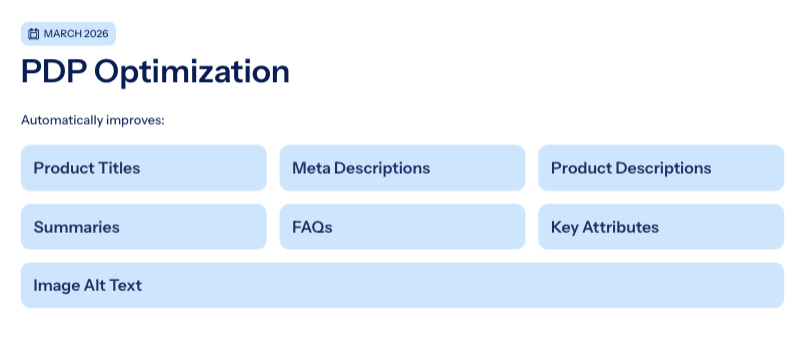
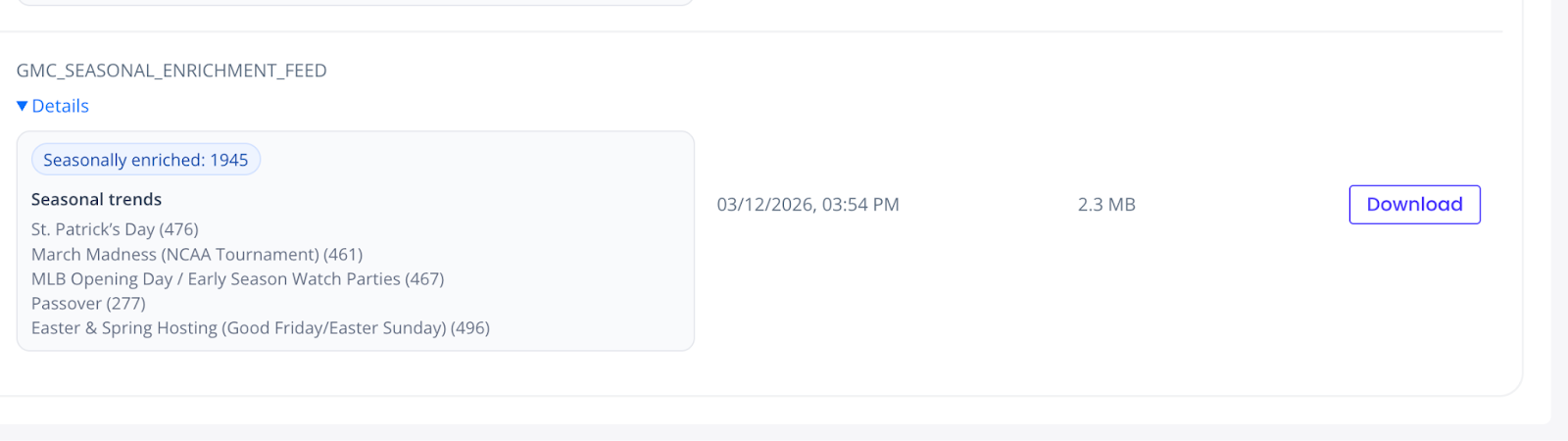
A leading adult beverage retailer uses the new “Feeds View” in the portal to look at specific seasonal events enriched by Optiversal, including the total number of products that were enriched.
PRO TIP: Pages updated within 60 days are 1.9x more likely to appear in AI answers. We auto-refresh your feeds every two months to keep you "fresh" in the eyes of the algorithm. This includes automatic updates for micro holidays like Easter, March Madness, Kentucky Derby, Spring Training, Mother's Day, etc.
*NOTE you need be a merchant enrichment customer to access this
Find all monthly product updates here.
Where to find us
We’ll be at POSSIBLE in Miami April 27-29 plus eTail Connect in Miami and SheInnovates in NYC in May! If you want to see how these "AI Overviews" are affecting your specific category, send me a DM to book a 15-minute data audit with our team.