May Recap

It was a BUSY month. If you’ve felt a bit of whiplash looking at your search traffic or keeping up with Google’s announcements this month, you are not alone.
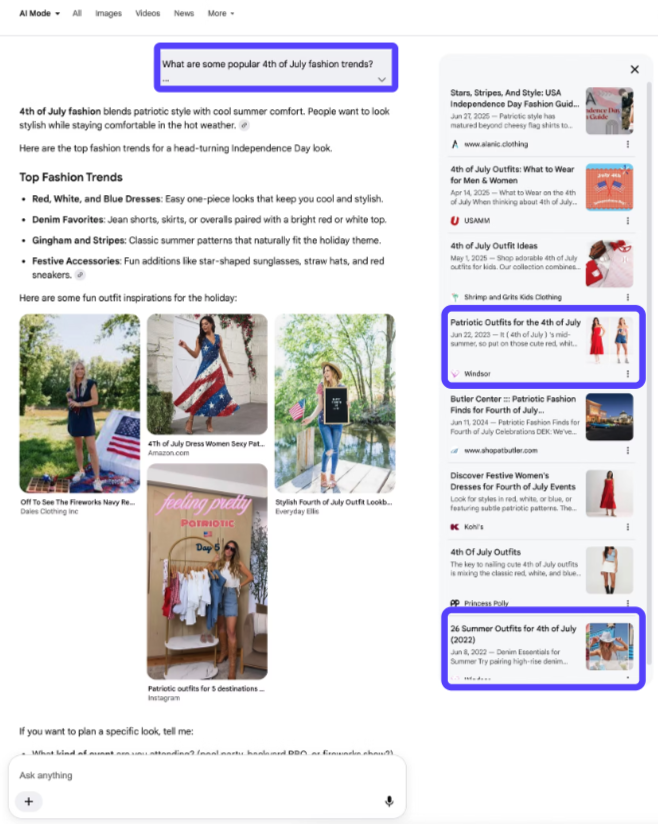
But before we dive into the data, I want to share a quick story about something I noticed last week. I was playing around with Google’s new Explore with AI Mode, looking ahead at 4th of July trends. I typed in some casual, conversational queries about summer party outfits. And as I scrolled through the AI’s styling recommendations, an unexpected brand kept showing up: Windsor.
They weren’t just showing up in traditional product listings; they were embedded directly into the AI’s narrative recommendations. Windsor is clearly doing something right to optimize for this new era of discovery.
🔍 What Happened This Month: The May Search Recap
- Google search as you know it is over— May 2026 was the single most transformative month for retail e-commerce in decades. A rapid succession of core algorithm updates, native AI checkout ecosystems, and brand-new machine-readiness standards completely overhauled how consumers find and buy products online. Here's the recap every retailer needs:
- The Intelligent Search Box Rollout — Billed as the"biggest change to the search box in 25 years,"Google launched a rebuilt, dynamically expanding input field that adapts to nuanced prompts. It bypasses classic autocomplete, pulling shoppers directly into zero-click conversational AI Mode visual experiences from their very first keystroke.
- The Google Universal Cart Announcement — An AI-powered, cross-merchant checkout ecosystem that allows shoppers to stash items from Search, Gemini, YouTube, and Gmail into a single persistent cart. It monitors real-time price drops and handles native checkout via Google Pay without forcing the consumer to ever visit the retailer's actual website.
- The May 2026 Broad Core Update (Begun May 21) — The second broad core update of 2026is currently rolling out globally across all languages and regions. Taking up to two weeks to fully deploy, Google's systems are heavily shaking up visibility to better surface "relevant, satisfying content" right as summer shopping traffic ramps up.
- AI Mode Conversational & Highlighted Ads — Google unveiled next-generation sponsored formats, including Conversational Discovery and Highlighted Answers, directly inside AI Mode. These paid placements sit inside generative response fields, threatening to heavily squeeze organic click-through rates (CTR) for standard listings.
- Chrome Lighthouse 'Agentic Browsing' Audits (Early May) — Google officially integrated an
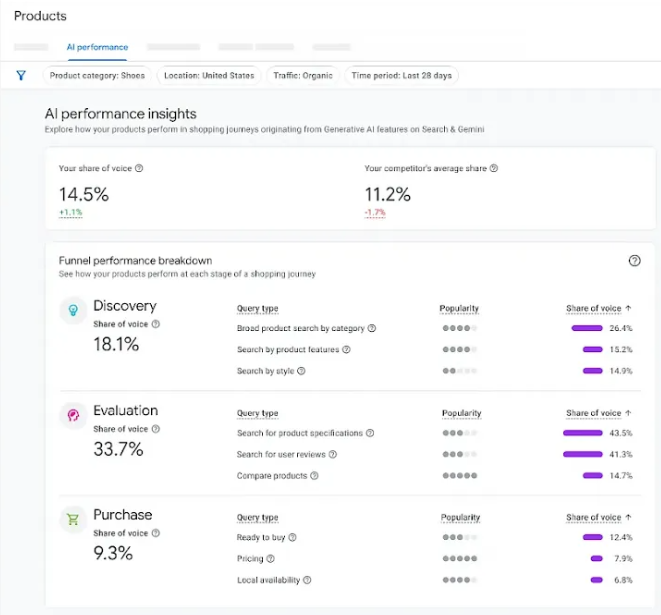
llms.txtand WebMCP infrastructure check into Chrome's Lighthouse 13.3 web-quality toolkit. Sites lacking these lightweight, machine-readable asset maps are now flagged as unprepared for autonomous AI web-browsing agents. - Google Rolled Out AI Performance Insights
What you need to know:
The algorithm updates and interface overhauls rolled out simultaneously for a reason: Google is shifting Search from a directory of links into an autonomous execution layer. With the Intelligent Search Box coaxing consumers into writing full paragraphs instead of keywords, and Universal Cart removing the friction of a website redirect, standard SEO real estate is shrinking.
To stay visible, your site content must act as the trusted data source that Google's RAG (Retrieval-Augmented Generation) engine uses to justify its answers. Audit your Search Console immediately: if your organic metrics dropped sharply around May 19, you are likely suffering from the new AI interface layout and ad placements; if your metrics started sliding post-May 21, you are dealing with the Core Update. The remedies for these issues require completely different technical and content strategies.
Getting Found in AI Doesn't Require "Magic" SEO Hacks
If you’ve been feeling overwhelmed by the rise of AEO/GEO, take a deep breath. A recent standout piece by Pedro Dias titled "The Whole Point Was the Mess" highlights a growing problem in the search industry: vendors are repackaging old-school SEO tactics (like complex structured data) and selling them as top-secret hacks for AI search.
LLMs don’t read the internet the way traditional search crawlers do. They don't need to be spoon-fed structured data to understand your website. As Dias plainly puts it regarding LLMs: "The parsing layer they are imagining is not there. The model already parsed your sentence. It did so by reading the sentence."
Here is what retailers actually need to know to get their products and pages cited by AI engines like ChatGPT, Gemini, and Google's AI Overviews:
1. Don't Fall for "Technical GEO" Snake Oil
Be wary of agencies pushing expensive "Technical GEO audits" that promise massive AI visibility simply by restructuring your content into FAQ schema or backend markup. LLMs are literally built to understand unstructured, messy human language. If your content relies on hidden code to make sense, you're optimizing for the past, not the future.
2. Keep Schema for Traditional Search, Not AI
Schema markup (like Product, Review, or Local Business markup) still absolutely earns its keep for traditional Google Search rich snippets. Keep doing it! But recognize its limits: it will not improve how an AI model understands your content or decides to cite your brand. By the time an AI is formulating an answer, the structured layer is invisible, it only cares about your text.
3. Clear, High-Quality Writing is Your Best Optimization Tool
If you want an AI to recommend your products, your product descriptions, buying guides, and category pages need to be exceptionally well-written. AI models favor clear, descriptive, and authoritative text. If a human shopper can easily extract the value, specs, and benefits from reading your page, an LLM will be able to do the exact same thing.
4. Ditch the Templated Fluff
Producing a high volume of thin, templated pages at the expense of actual quality will end the way every similar SEO trend ends: the algorithms adjust, the fluff loses visibility, and you're left with pages that say nothing. AI search engines are looking for substance and expertise to cite.
 Pedro Dias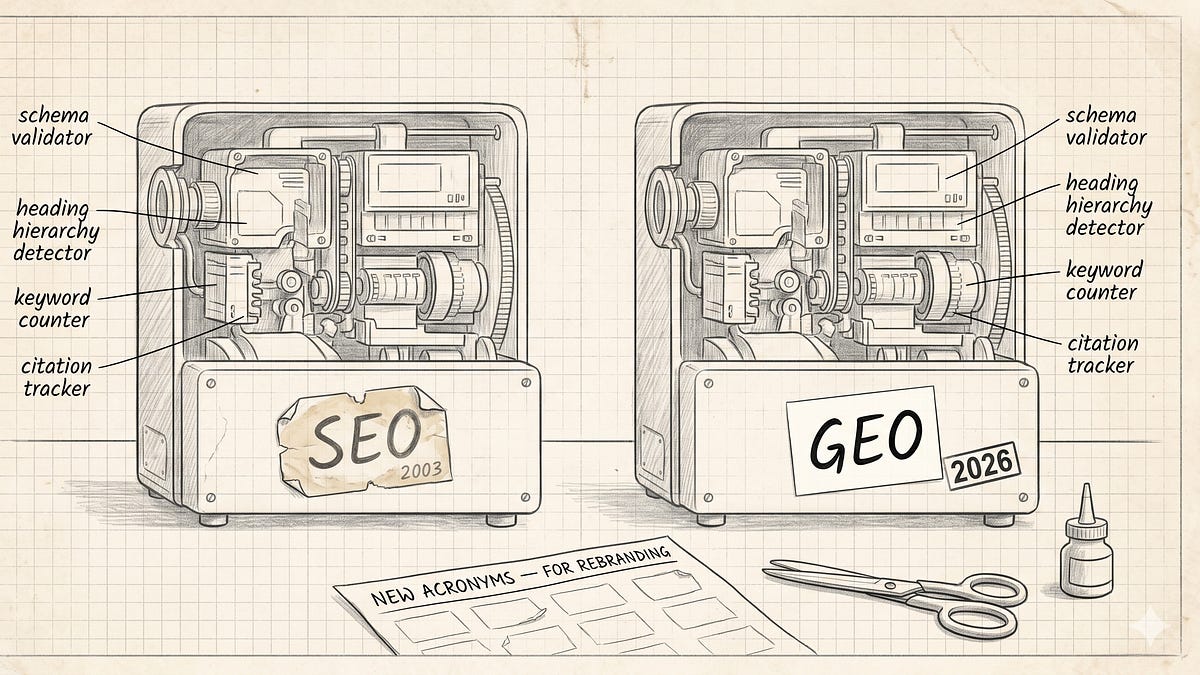
Read the full post here
Product Spotlight: Track What Pages AI Uses to Recommend Your Products
Modern AI engines like ChatGPT, Gemini, and Google AI Overviews don't just pull product recommendations from a static database. They actively crawl the live web, acting like lightning-fast researchers compiling a custom shopping report.
That means your Optiversal pages are doing way more than just driving traditional Google clicks, they are also acting as primary research sources for AI. Now, we are tracking their compounding value as critical informational touchpoints for the next generation of AI-assisted shoppers by seeing exactly which specific pages AI is using as a research resource when making recommendations.
Because LLMs love highly structured, context-rich content, like Optiversal's review-synthesized and top-rated pages for example, we can pinpoint your biggest "AI magnets" and understand exactly which categories and pages are establishing the highest authority in AI ecosystems.

Where To Find Us
• Join our LIVE WEBINAR with Pedro Dias on June 17th to learn about the no BS approach to eCommerce search.
• June 23-24: CommerceNext NYC
• Join our LIVE WEBINAR with Aleyda Solis on July 15th to talk about how retailers are preparing for Holiday 2026.
If you want to see how AI Surfaces are affecting your specific category, send me a DM to book a 15-minute data audit with our team.