June Recap

I saw this on Poshmark, and it reminded me about how easy it is for retailers to miss the “moment.” And that’s true for many reasons including bandwidth/internal resources or tech, the moment(s) change too quickly or there are too many different ones. Like right now, I'm seeing World Cup (+watch parties), Summerween, tenniscore/sporty styles, early back-to-school dorm, summer routine resets, etc. And that doesn't even include the bigger holidays like 4th of July and Labor Day!
So for example, if you have swimsuits but don’t have a dedicated landing page for “sporty swimsuits” or “sporty” as an attribute in your advertising feeds, you’ll miss the moment AND the high-intent search.
At Optiversal, I’m proud to say we help retail brands capture all of these moments and auto-update to hit the next one. We find what shoppers are actually searching for, how they’re searching for it, and we build content to help the right products show up for those searches across the entire catalog.
So this summer (and going into holiday), we want to make sure you never miss a moment!

🔍 What Happened This Month: The June Search Recap
- The Raw HTML Mandate for Product Pages - A recent test of 12 major AI assistants proved they ignore rendered JavaScript when grounding answers and exclusively read raw HTML. Move your critical product prices and specifications out of client-side code and into server-side HTML so AI bots can actually see your storefront.
- Stop Naming Your Own Brand "The Best" - Brands writing self-promotional "Best Category" listicles and ranking themselves number one are feeding data to AI models that actively omit the biased brand from final recommendations. Stop funding self-serving roundups and redirect that budget into digital PR to secure authentic placements on third-party review sites that AI engines actually trust. Or use "Top Rated" lists ranking products based on real customer reviews.
- Google's New Scalable AI Spam Eradicator - Google launched the Scalable Cluster Termination System to detect and terminate entire networks of accounts using identical AI-generated narrative templates. Audit your product description workflows today to ensure you avoid repetitive AI prompts across your catalog and prevent automated penalties from taking down your entire retail domain.
- The June 2026 Global Spam Update - Google released its second spam update of the year on June 24, applying globally across all languages. This rollout arrives on the heels of their May policy expansion, which explicitly forbids manipulating generative AI responses (like AI Overviews). If you have been doing honest work with genuine content and earned links, this update is mostly a spectator sport. However, keep your eyes glued to your Google Search Console data starting June 24. Any unexpected traffic shifts in the coming days are highly likely tied to this algorithm update.
- The Death of the
llms.txtHype - An Ahrefs study of 137,000 domains revealed that 97% ofllms.txtfiles are never read by AI bots, and Google confirmed they completely ignore them for search rankings. Stop spending engineering time creating specialized Markdown text files for AI models and refocus those resources on classic, highly crawlable HTML infrastructure. Your same pages can be used and optimized for humans and AI - same site, different audiences.- NOTE: What we are seeing here isn't Google treating llms.txt as a special AI standard, but rather classic Googlebot behavior:
it finds a link → follows it → crawls and indexes the content
If you internally link any .txt file, Google will index it, regardless of whether it's named llms.txt or anything else. In other words, Google would treat it like any other homepage written in plain text. Ugly, unformatted, but fully indexable 😁.
- NOTE: What we are seeing here isn't Google treating llms.txt as a special AI standard, but rather classic Googlebot behavior:
- The UK's Algorithm Accountability Mandate - The UK's Competition and Markets Authority issued a legally binding mandate forcing Google to make its ranking fairer and pre-announce significant algorithm updates. Adjust your international retail SEO strategy to lean heavily into compliance-friendly markets, as regulatory crackdowns will soon make traffic drops from black-box updates much easier to predict and manage.
Podcast Highlight: Show up everywhere shoppers search
AI search is already changing how shoppers discover products, compare options, and decide what to buy. The brands that show up will be the ones with the clearest, most complete, most useful product content across every surface shoppers and AI agents are using.
In this episode of Ecommerce Coffee Break, our CEO Lucas Tieleman joins Claus Lauter to talk about what that actually means for retailers right now including the very practical places where most brands are already falling behind: incomplete product feeds, generic PDP content, static landing pages, and product data that was built for old-school search, not conversational discovery.
Retailers will hear why shoppers are no longer searching in short keywords. They are asking full questions, comparing use cases, shopping by occasion, and expecting AI to return a confident answer. That creates a huge opportunity, especially going into holiday, but only if your product data and content give AI enough context to understand why your product is the right fit.
Because the big question for holiday is no longer just, “Are your products online?” It is, “Can shoppers and AI actually find them, understand them, and find/recommend them when it matters most?”
So grab a coffee and give it a listen here.

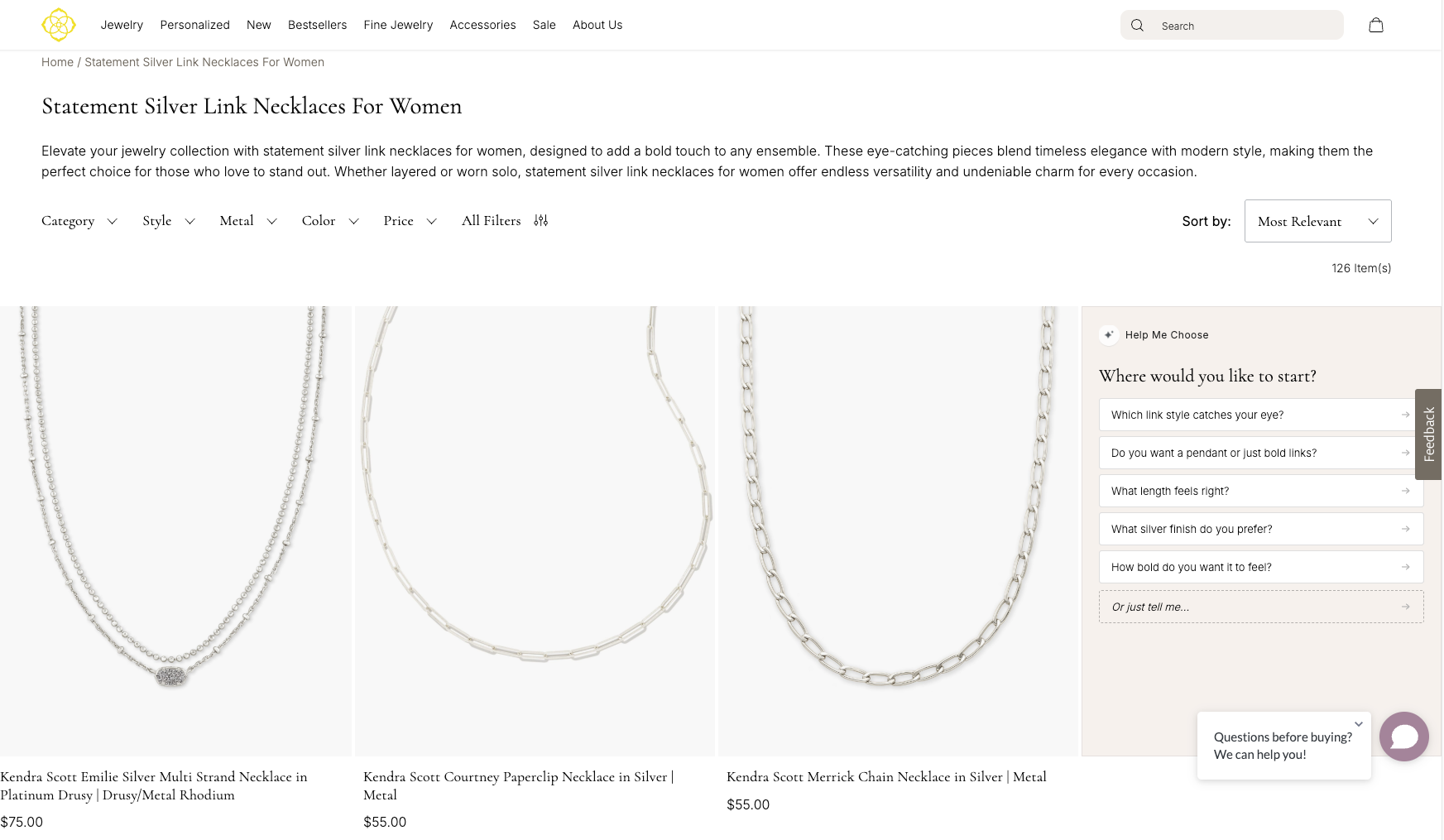
Product Spotlight: Guide shoppers through the onsite buying process with Conversational Filters
Shoppers want more guidance when they are buying things, especially when they are comparing options, shopping for someone else, or trying to figure out what is right for a specific need.
That is one of the reasons product discovery is moving toward LLMs like ChatGPT. Shoppers can ask a question in plain language, get help narrowing down options, and keep refining based on what matters to them.
Even AI search experiences are becoming more guided and helping the shopper think through the next best question: Who is this for? What occasion is it for? What style do you want? What matters most: price, material, fit, performance, or use case? With Conversational Filters, Optiversal brings that same guided experience to your site.
Instead of dropping shoppers into a blank search bar or a long list of rigid filters, Conversational Filters help guide the buying journey by suggesting the next best questions to ask about a product to reduce friction in the buying process and increase confidence in a purchase.
New Resources
• The AI-Ready Google Merchant Center Feed (eBook)
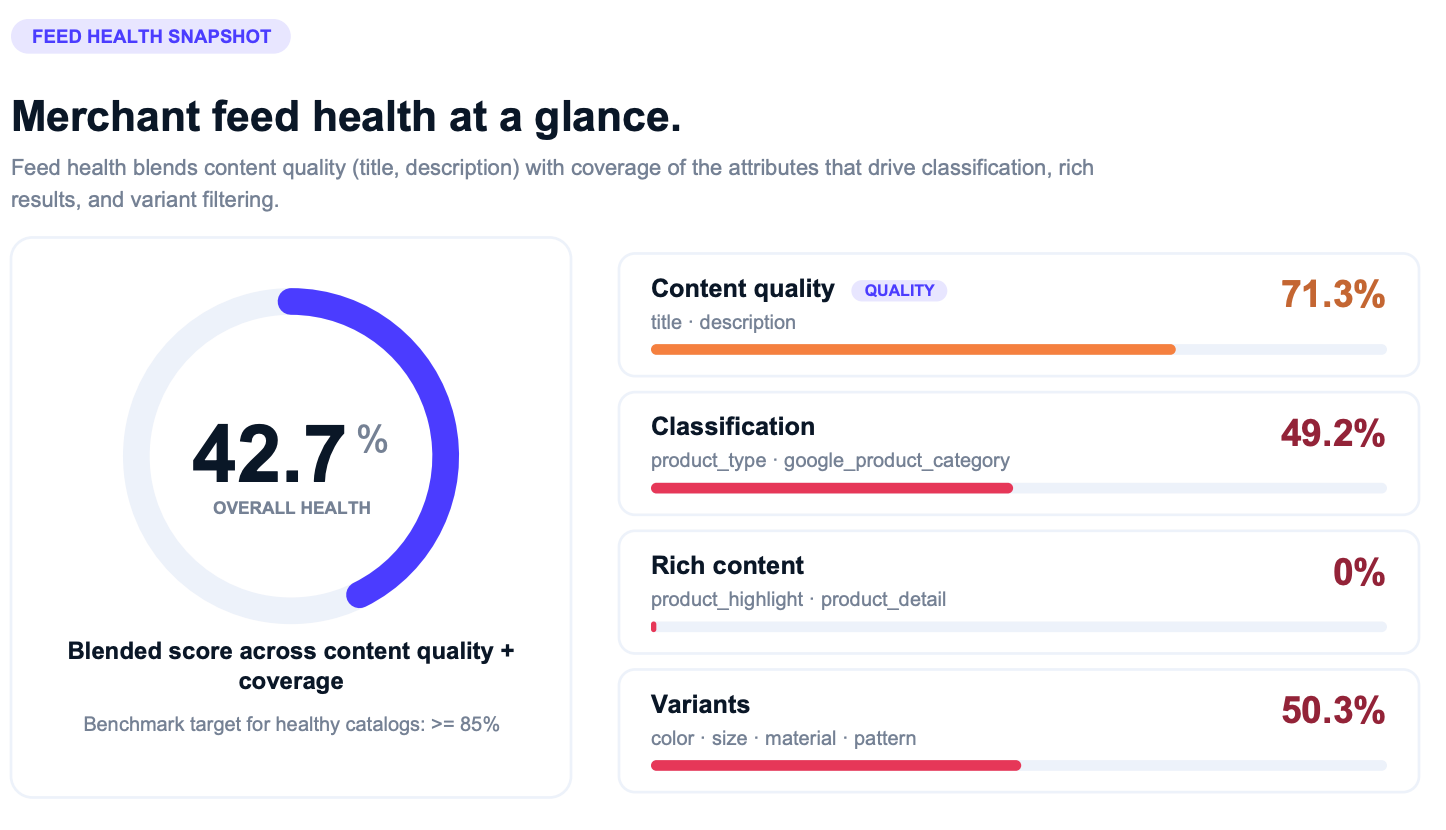
• Get your free GMC feed audit to understand where the current gaps are and how to fully optimize your feed for humans and AI prior to peak holiday season.
Where To Find Us
• Join our LIVE WEBINAR with Aleyda Solis on July 15th to talk about how retailers are preparing for Holiday 2026.
If you want to see how AI Surfaces are affecting your specific category, send me a DM to book a 15-minute data audit with our team.